"How Mobile Networks Work: The Science Behind Calls, Data, and 5G Connectivity
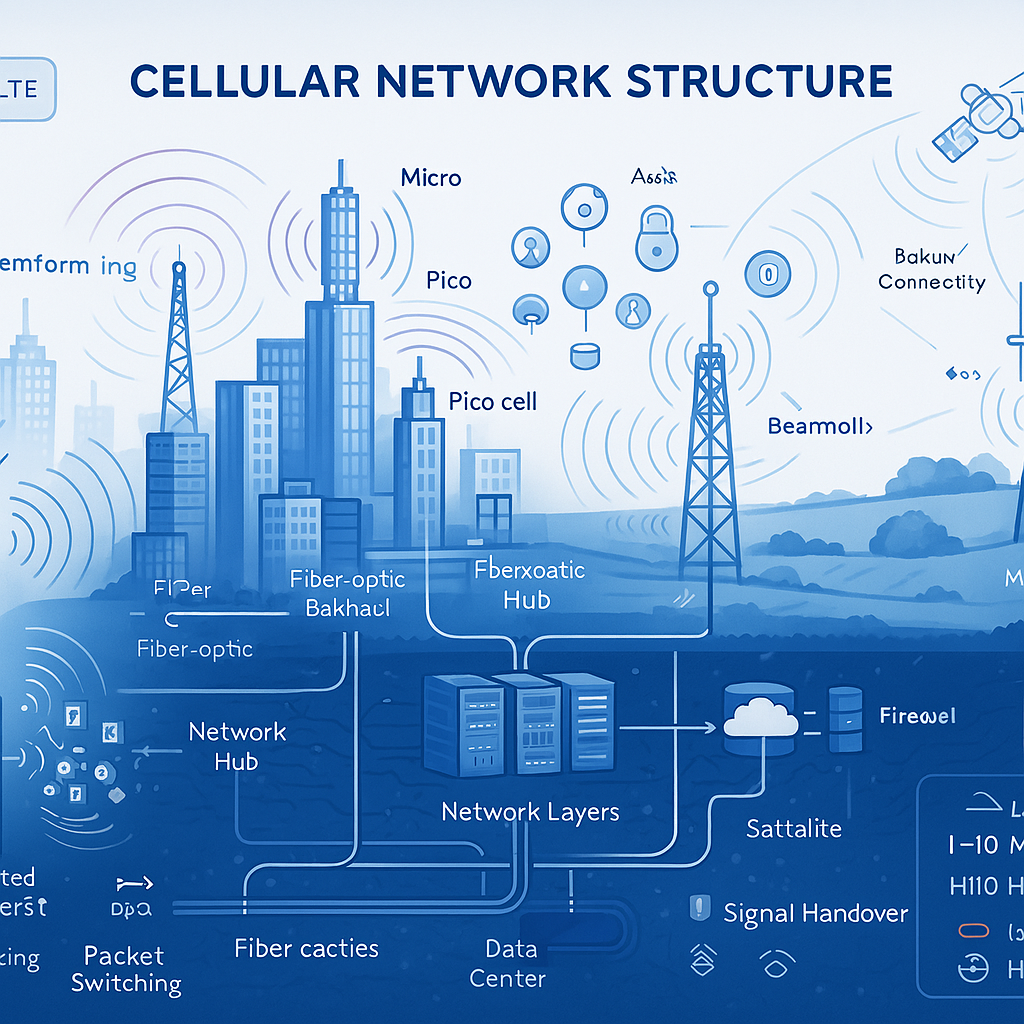
Mobile networks enable calls and data through cellular architecture, dividing regions into cells served by base stations that manage radio waves (600 MHz to 100 GHz) for coverage and speed. Voice/data signals are digitized, modulated (e.g., QAM), and routed via circuit or packet switching—modern systems like 5G prioritize packet-based VoLTE for efficiency. Core infrastructure (MSC, gateways) authenticates users and routes traffic, while evolving standards—1G (analog) to 5G (mmWave, beamforming, ultra-low latency)—boost speed and capacity. Challenges like signal interference are countered with repeaters, MIMO, and error correction. Encryption (AES) and SIM authentication secure communications, while satellites and IoT integration expand connectivity. Emerging 6G and terahertz tech promise faster, AI-driven networks.
See More..